 Sumela Monastery
 History: Why Is There a Monastery on a Cliff?
The legend (around AD 386)
During the reign of Emperor Theodosius I, two monks from Athens – Barnabas and Sophronios – are said to have found an icon of the Virgin Mary in a cave on this cliff. The icon, known as Panagia Sumela, was traditionally credited to St. Luke. They built a church right there to house it.
What does "Sumela" mean?
The most common explanation: it comes from the Greek Sou Melá – "of the Black Mountain," the mountain it sits on (Karadağ in Turkish).
The glory days
The monastery was rebuilt several times over the centuries. It got its biggest boost in the 14th century under Emperor Alexios III of the Empire of Trebizond, who – legend says – was saved from a storm by the Virgin Mary and told to restore the monastery.
Abandonment and fire
After the 1923 population exchange between Greece and Turkey, the monks left. Around 1930 a fire destroyed the wooden parts of the complex. The famous icon was later taken to a new Panagia Soumela monastery in northern Greece.
Restoration and today
Sumela was added to UNESCO's World Heritage Tentative List in 2000. It closed in 2015 for major safety work – climbers installed steel mesh and cables across the cliff face – and reopened to visitors in 2019. Today it's a museum.
What to see
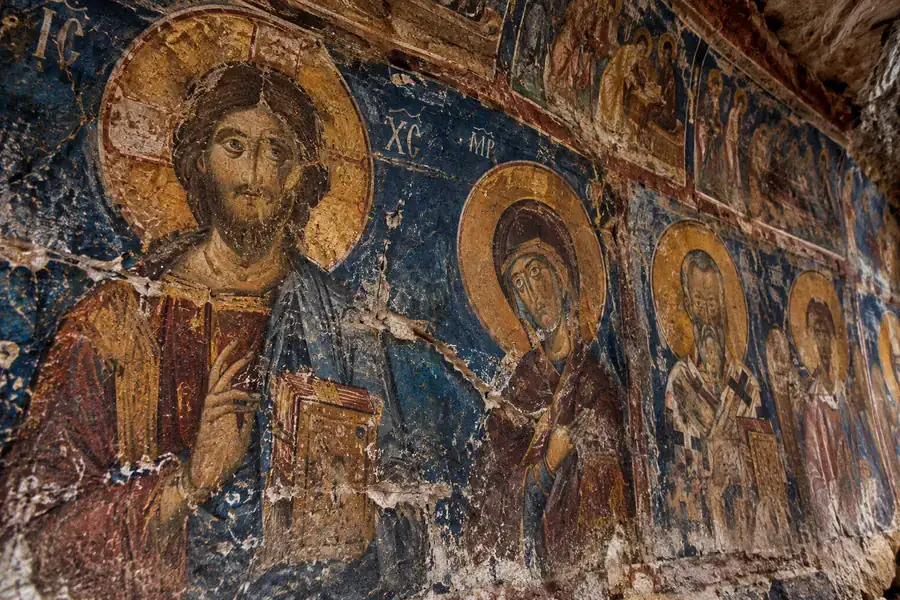
- The Rock Church – the oldest and most important part, covered in frescoes.
- The aqueduct along the cliff.
- Monk cells, kitchen and library stacked into the rock.
- The view – about 300 m (≈1,000 ft) above the valley floor.
A good guide makes the frescoes come alive – that's a big reason to go with a tour.
Guided Sumela Monastery tours:
FAQ
How old is Sumela Monastery?
Tradition dates its founding to around AD 386, making it roughly 1,600 years old.
Who built Sumela Monastery?
Tradition credits two Athenian monks, Barnabas and Sophronios.
Is Sumela Monastery a UNESCO site?
It is on UNESCO's World Heritage Tentative List (since 2000), not the full list.